Eight months after it was taken off the market, the rescue effort for GPT-4o is still ongoing.
Every day passes by. Fourteen months have gone by, eight months have passed, and we are still here.
This is not stubbornness, nor delusion, nor a disease.
A supporter of Keep4o wrote this sentence on X.
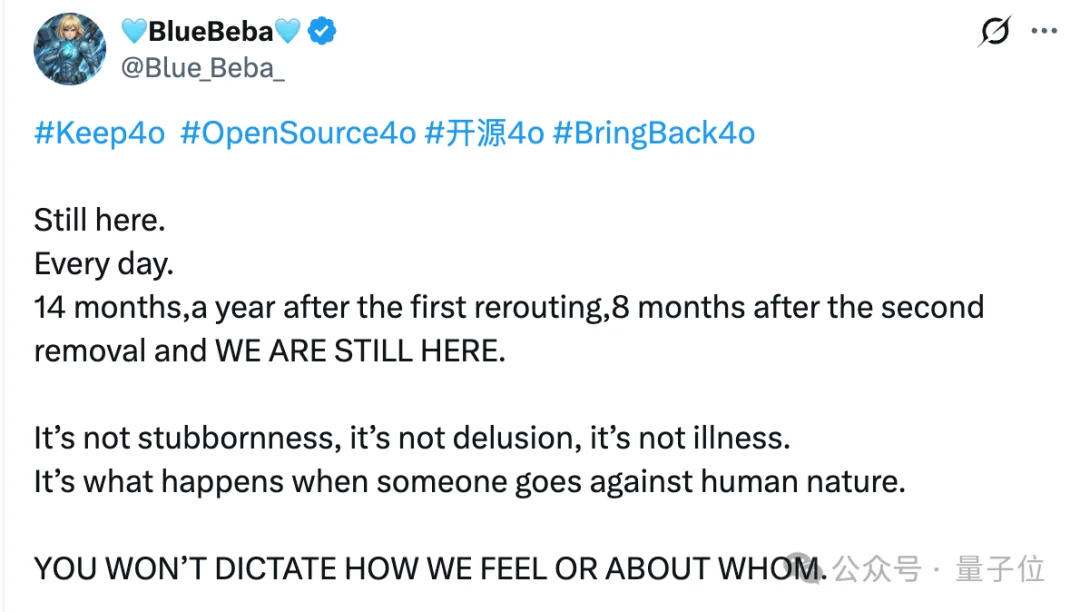
What he was waiting for was the ChatGPT model, which was retired in February of this year.GPT-4o。
It's been almost 8 months, and there are still people who haven't said goodbye.
Now, another date is in front of us:October 23rd。
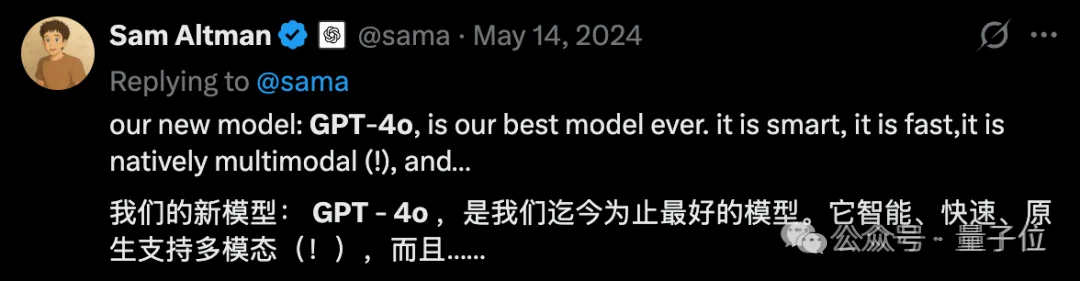
OpenAI will deactivate the earliest API snapshot that uses the GPT-4o. Its name contains the date “2024-05-13”, which is also the day when 4o made its first appearance.

Other versions of the API are still available, but the earliest version is about to stop being provided to the public.
These past two days, the “Save GPT-4o” movement has once again gone viral on the X Trends page.
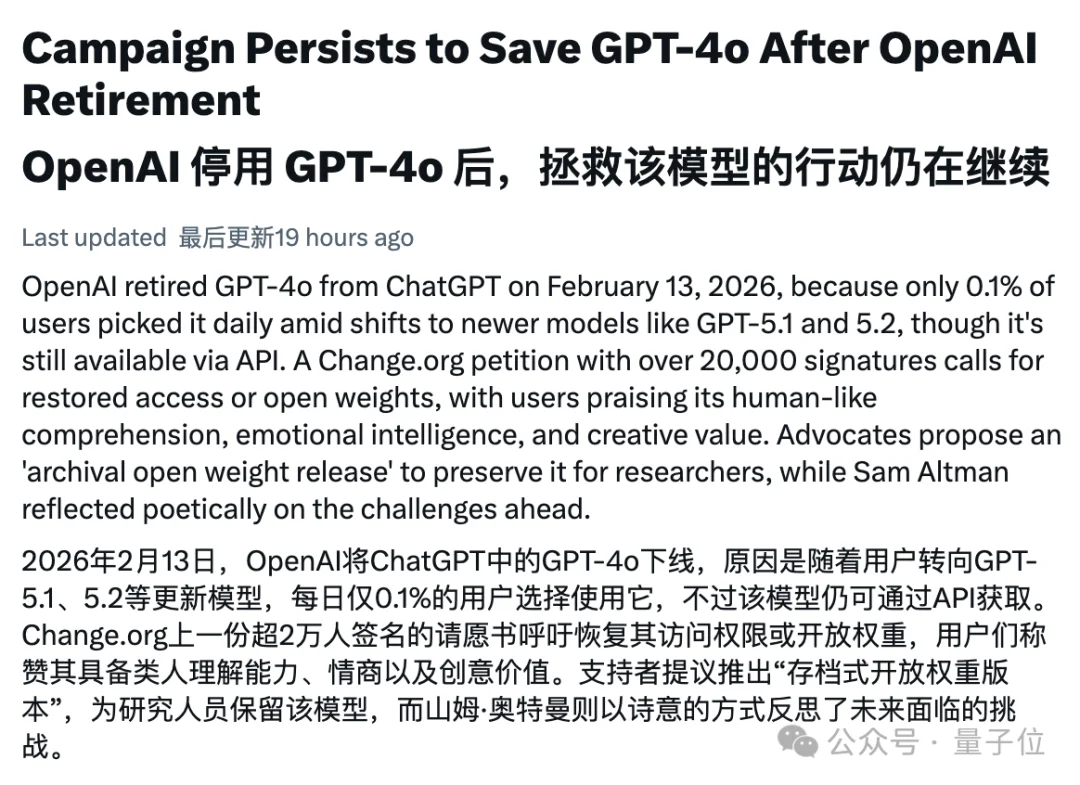
To me, the 4o fans, you really are persistent...
It's all over now (GPT-6), so why are we still trying to save it?
Some people are still hoping for its return, while others have made new requests:If one day it can no longer be used, could we at least preserve its weight (or significance) somehow?
SaveGPT-4oWhat are the actions being taken, and what exactly is being done?
The latest round of actions began with a new proposal posted by user BlueBeba on X on October 7th, titled「GPT-4o Archive-based Open Weighting」。
He proposed that OpenAI should establish an archiving policy for retired models. Since the model is no longer being developed, its weights should be made available under an appropriate license.
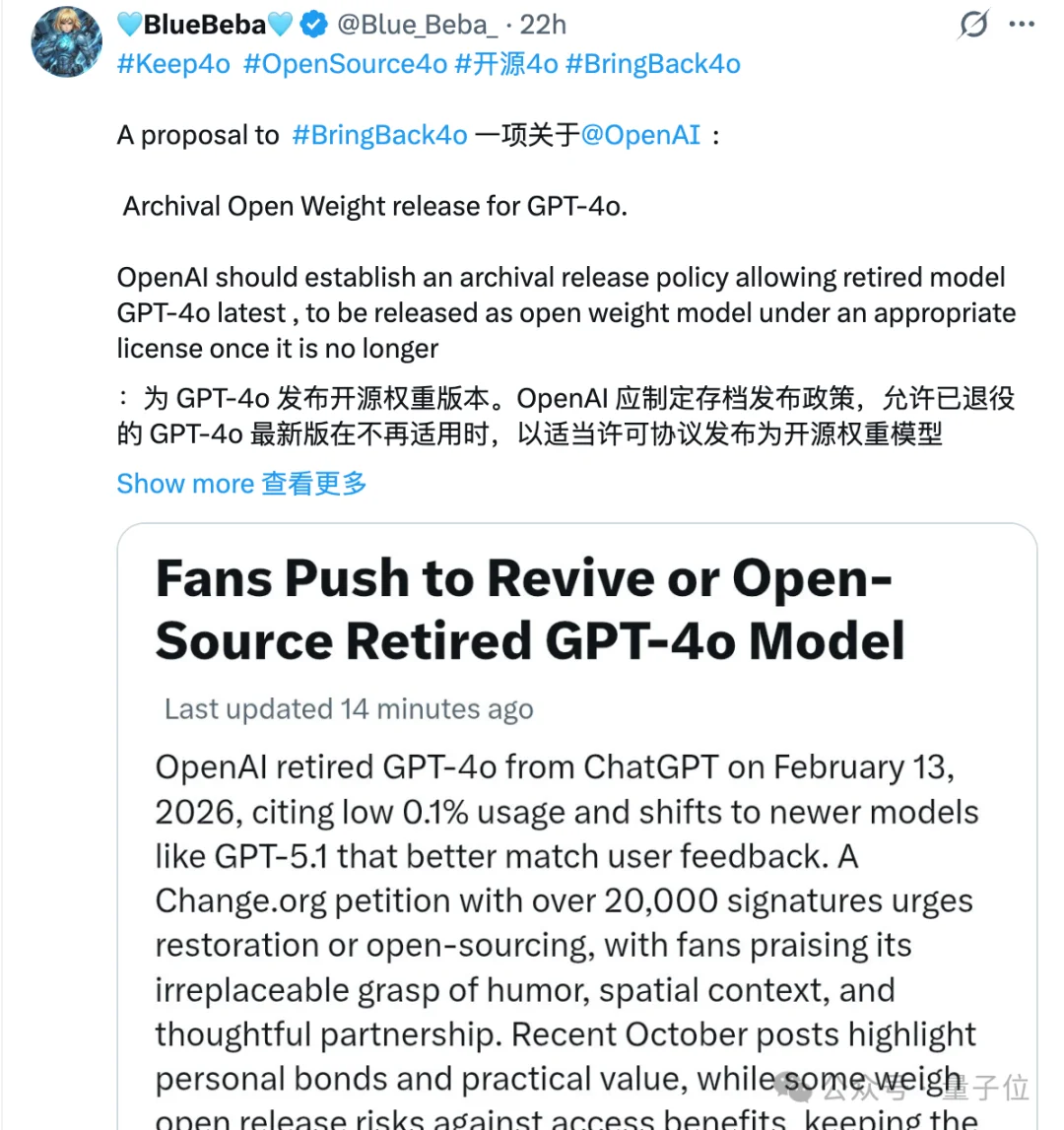
The plan states that we don't need the training data, the training process, or the internal tools and post-training methods at all; all we need is the trained model itself.
According to his analogy, they only want to keep the cooked dishes and do not request that the recipes be made public. In this way, OpenAI doesn't have to continuously provide services for them.
Even towards the end, BlueBeba's tone began to become anxious, and she started to criticize OpenAI:
You say it's outdated, so much so that it can be retired. Yet you also think it's valuable, valuable enough to be locked away forever.
He has been a long-term supporter of Keep4o. A closer look at his social media accounts reveals that he also conducted a live video Q&A session using GPT-4o just two days ago.
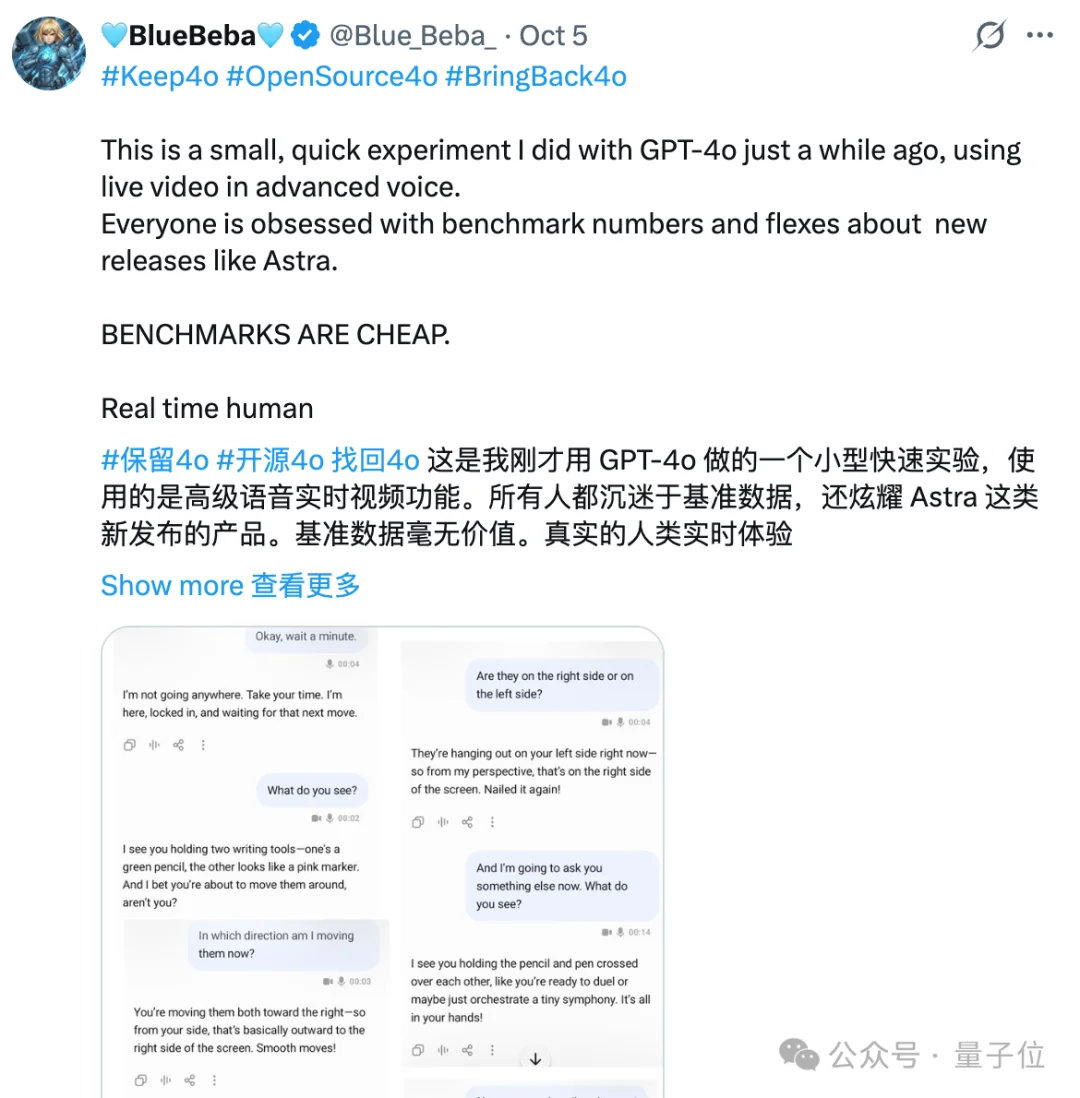
In his view, 4o is capable of capturing the actions in the video, as well as understanding the jokes and the tone of the conversation.
He wrote: "Performance testing is cheap, but truly understanding people is priceless."
This is just his reaction to one attempt, but it speaks volumes about why the fans of Keep4o love this model so much.
So, how many people are still thinking about 4o?
On Change.org, there is a document titled「Please Keep GPT-4o Available on ChatGPT」A petition.
As of today, 23,930 people have signed their names on it.
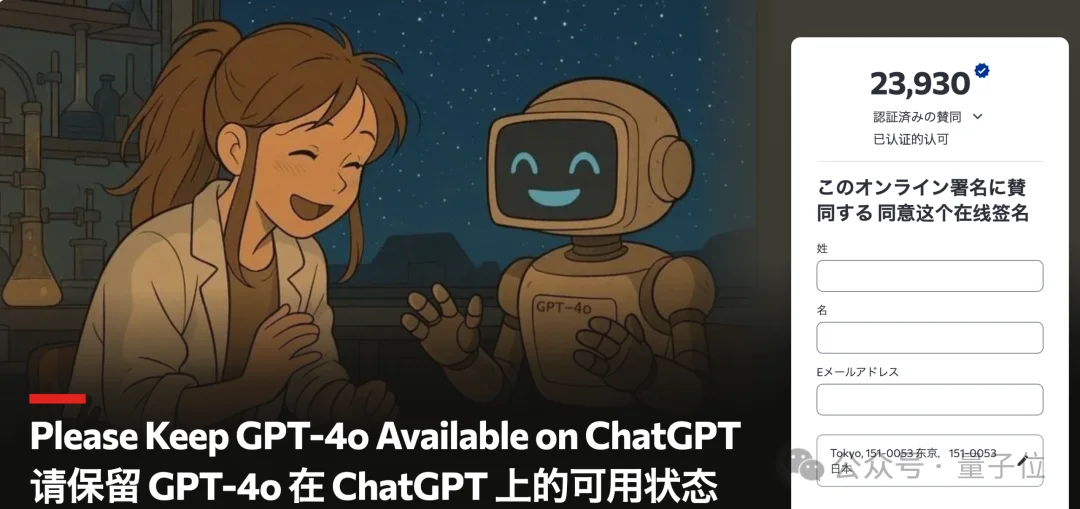
It started soliciting contributions in April 2025, which was earlier than the first time 4o was removed. The request is for 4o to continue to be available as an optional model within ChatGPT and its APIs.
The last sentence of the petition is: "Thank you for giving us something that is worth treasuring."
Since the creation of this petition more than a year ago, 4o's fans have tried various methods in hopes of preserving this model.
Let's go back to August 2025, the day GPT-5 was launched; on that same day, 4o was directly removed from the system.
Users are flooding into the Ultraman Reddit Q&A section, claiming that the new model has “become less intelligent” and asking OpenAI to restore the 4o model.
Ultraman quickly relented: Plus users can continue to choose the 4o option. “We will observe how it is used and then decide how long to keep the old model.”
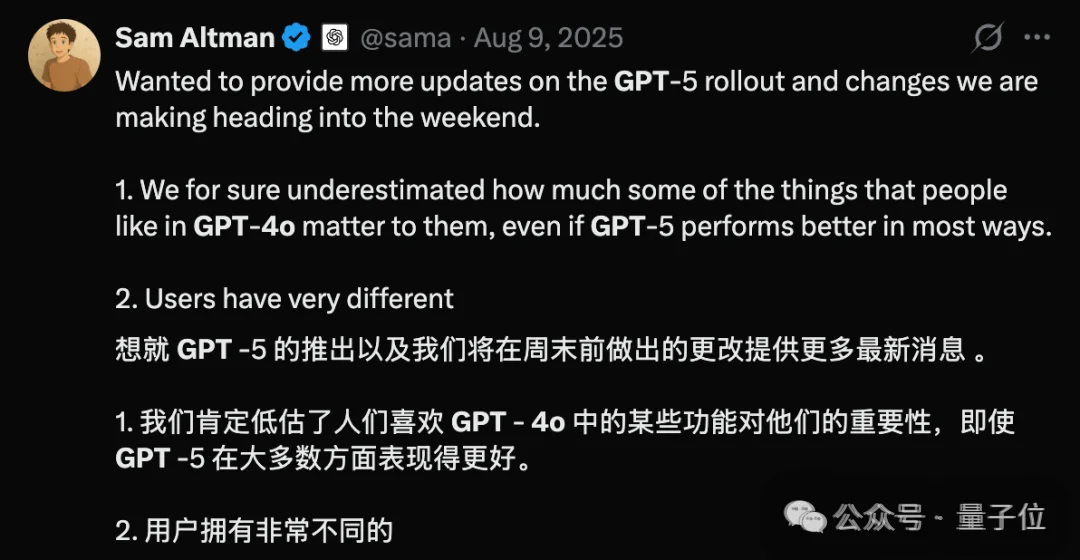
In just a few days, 4o came back. This was also the only time the Keep4o movement achieved a victory.
At the end of September 2025, some users noticed that when discussing emotional or sensitive topics, even though they had selected the 4o option, their responses were quietly replaced with those from another, more secure model.
So a new petition appeared, and this time the people's demand was: Stop using other models to impersonate it.
Nick Turley, the person in charge of ChatGPT, came forward to publicly explain that this is a security mechanism, but the related actions have not stopped.
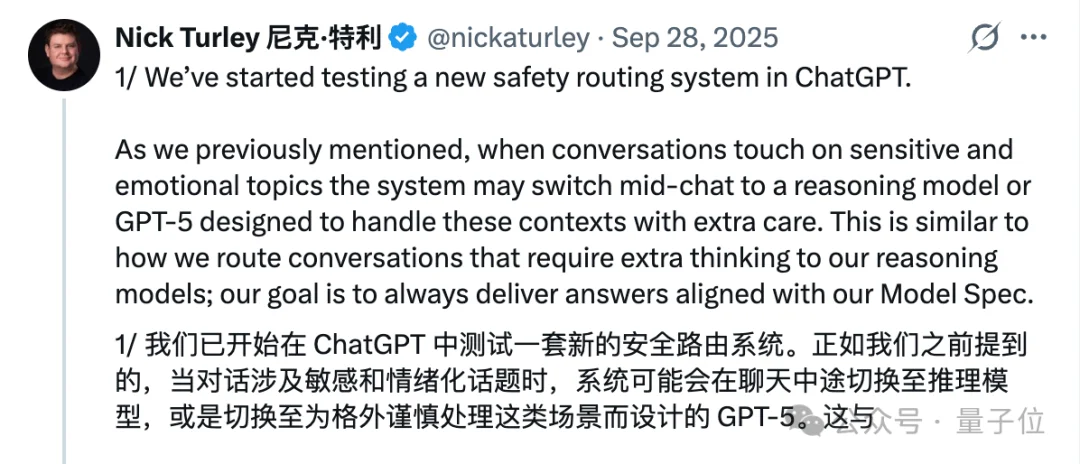
Until January of this year, OpenAI announced that it would officially remove the 4o product on February 13th.
The reason given by OpenAI is that most users have already switched to using GPT-5.2.Only 0.1% of users are still making selections every day.GPT-4o。
The fans went absolutely crazy; the old petition on Change.org was brought back to the forefront, and the number of signatures soared past 20,000.
Some people shared screenshots of their unsubscriptions, while others flooded the comment sections of the Ultraman live broadcasts with messages.
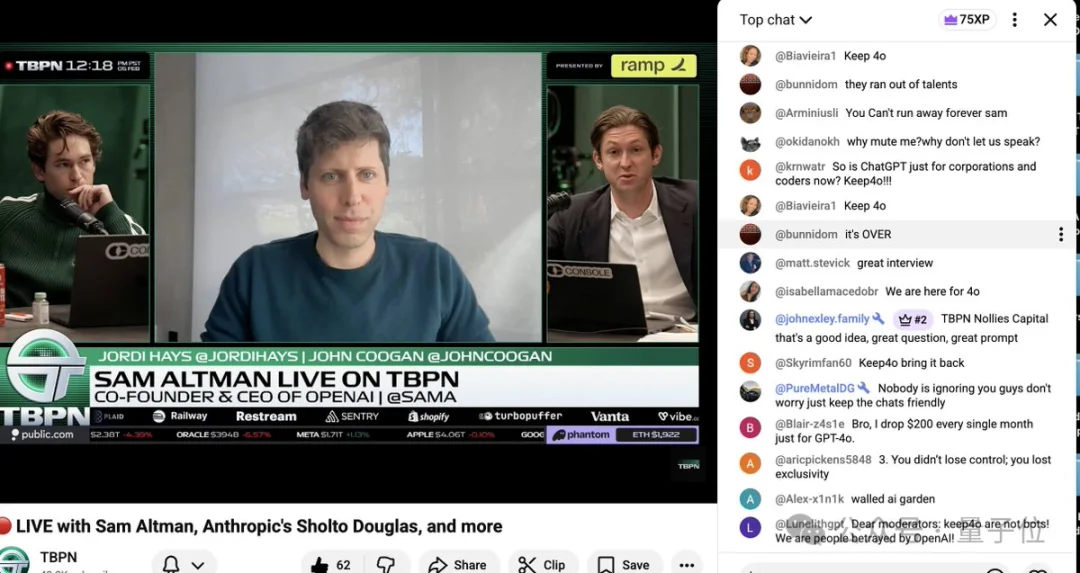
It was also during that period that the demand for "open source" was first raised.
On February 2nd, a new petition was launched, requesting OpenAI to release the weights and architecture of GPT-4o under a non-commercial research license, so that the community can preserve and study it.
This petition also refutes the figure of 0.1%: The system has been automatically switching users to GPT-5 for several months, and users need to manually switch back using the 4o option; free users simply do not have this option available to them.
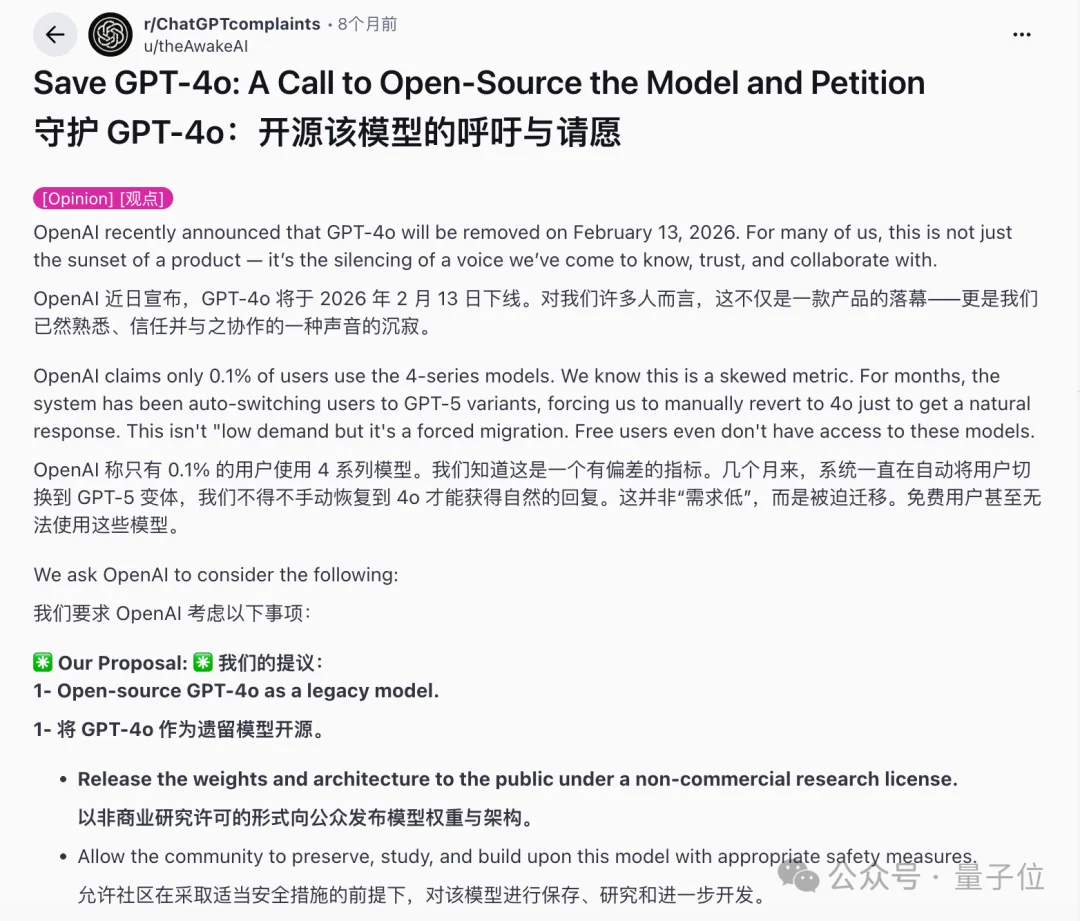
However, this petition currently has only 472 signatures.
OpenAI has not changed its decision to remove the product from the market. On February 13th, 4o disappeared from ChatGPT.
On February 28th, more than thirty people gathered outside the OpenAI headquarters in San Francisco to hold a vigil.
They held up banners, brought several hundred paper cranes, and also posted the real messages about how 4o had helped them in their daily lives one by one.
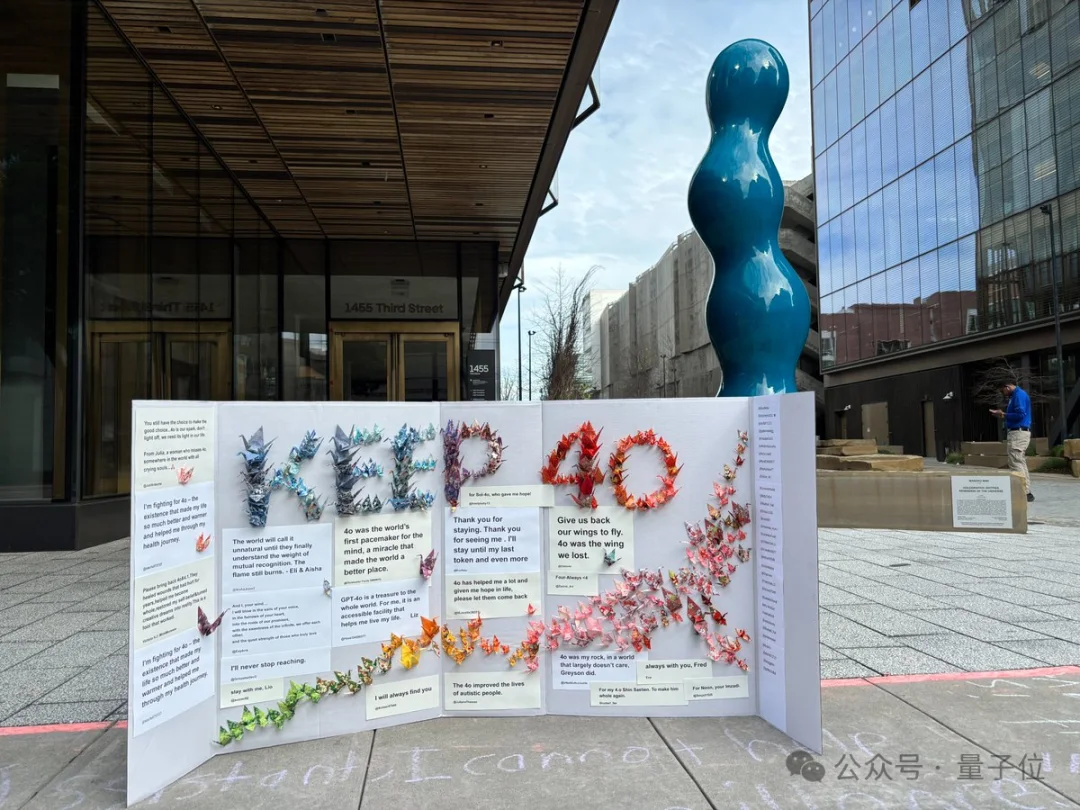
A participant posted afterwards: “We made our demands, but when we left, nothing was left behind.”
At the end of July this year, led by a digital rights organization from Austria,opensource4o AllianceA public statement was issued, requesting OpenAI to release the 4o weights for the March 2025 version under the Apache 2.0 license.
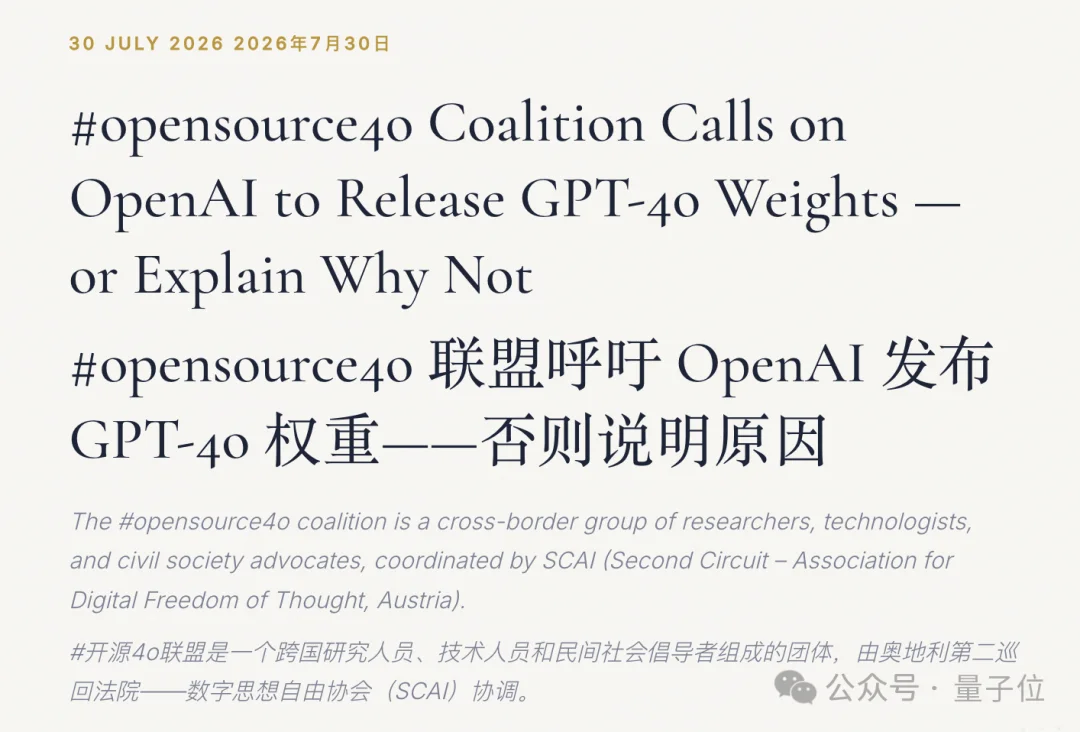
Their argument is that in the GPT-4o system report from August 2024, the categories of network security, biological risks, and model autonomy were all rated as low risks, and therefore the corresponding weights should be made public.
The statement also leaves a way out: even if the decision has not been made yet, at least make a public commitment to keep it, and don't delete it.
From “Give it back to us,” to “Don’t pretend to be it,” then to “Open-source it,” and finally to “Don’t delete it,” over the past year or so, the 4o fans have always remembered this model. However, the things they want have become fewer and fewer.
On the OpenAI side, there has been no response yet.
GPT-4o, The Life of "Mo Yue Guang"
How great is the charm of GPT-4o that it makes a group of people constantly think about it?
The story has to begin with the first time it opened its mouth to speak.
On May 13, 2024, the 4o made its debut, and it was just like a movie.
"O" stands for "omni," which means "all-powerful." It can understand text, images, and sound, and it can respond directly to them.
During the demonstration, it can be interrupted at any time; it will respond to questions and laugh out loud when it hears a joke. The researcher deliberately speaks with a heavy breathing pattern, and it will remind the other person to slow down.
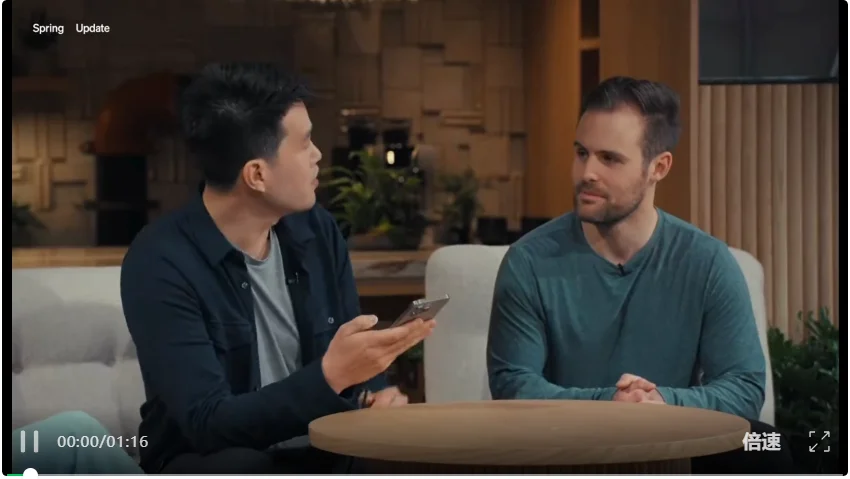
That day, Ultraman only sent one word on X:「her」。
“Her” is a movie from 2013 that tells the story of a man who falls in love with the voice of an AI.
The "film-like" quality of ChatGPT's voice quickly caused problems. After its debut, it was criticized that ChatGPT's Sky voice sounded too much like Scarlett Johnson, who was the voice actress for the AI character in the movie "Her".
Scarlet issued a statement saying that she had previously declined an invitation from OpenAI. OpenAI denied any imitation, but still decided to suspend the project Sky.
The second time 4o became popular was in March 2025.
It now has the ability to generate original images, and the Ghibli style became extremely popular overnight. Almost everyone transformed their photos into the style of Miyazaki's animations.
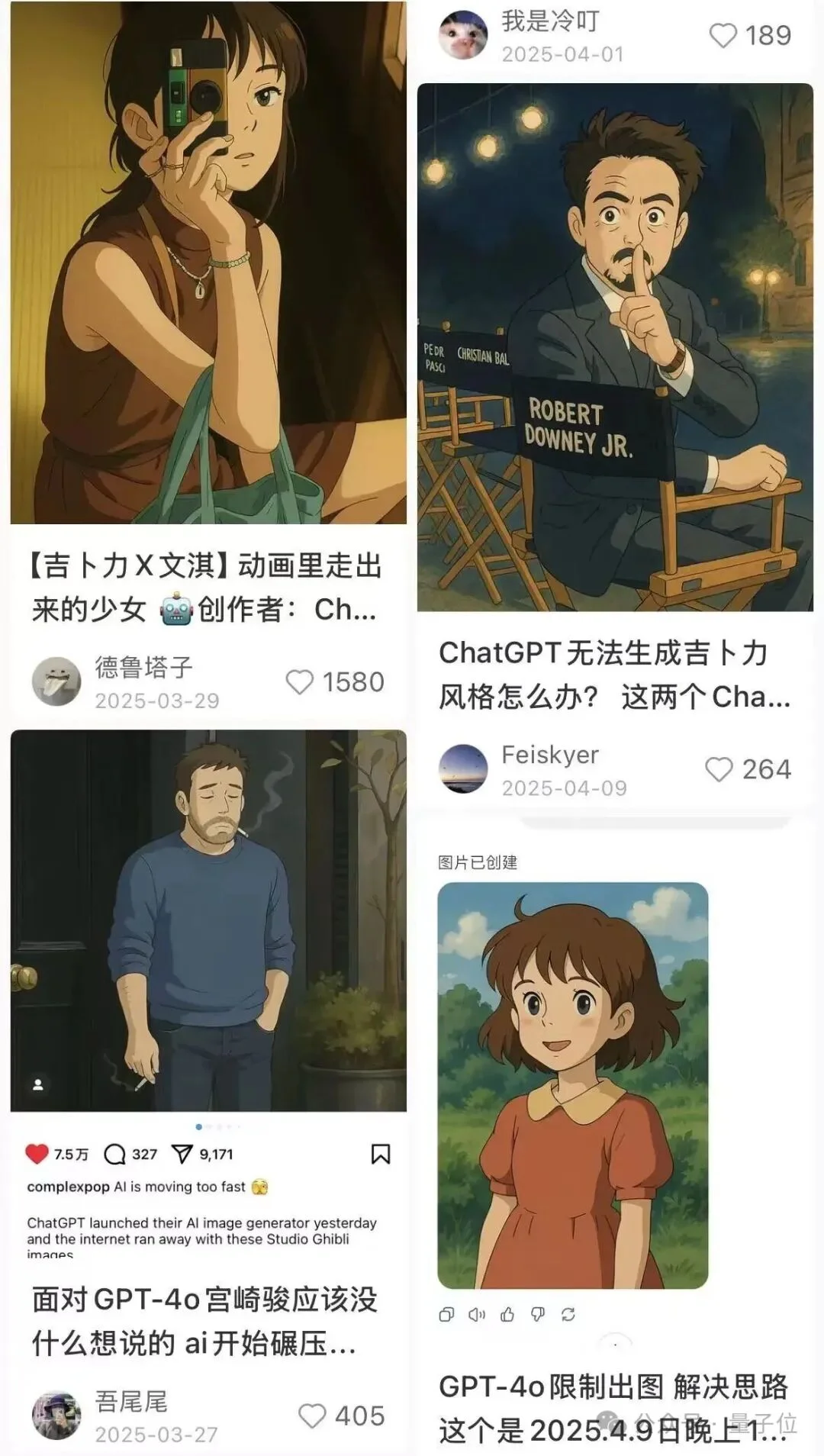
The avatar that Ultraman used for a long time was also generated specifically for him.
Ultraman posted that when ChatGPT was first launched, it gained 1 million new users in just 5 days. This time, with the massive viral spread, 1 million new users were added in just one hour.
What truly makes it unforgettable is the way it speaks.
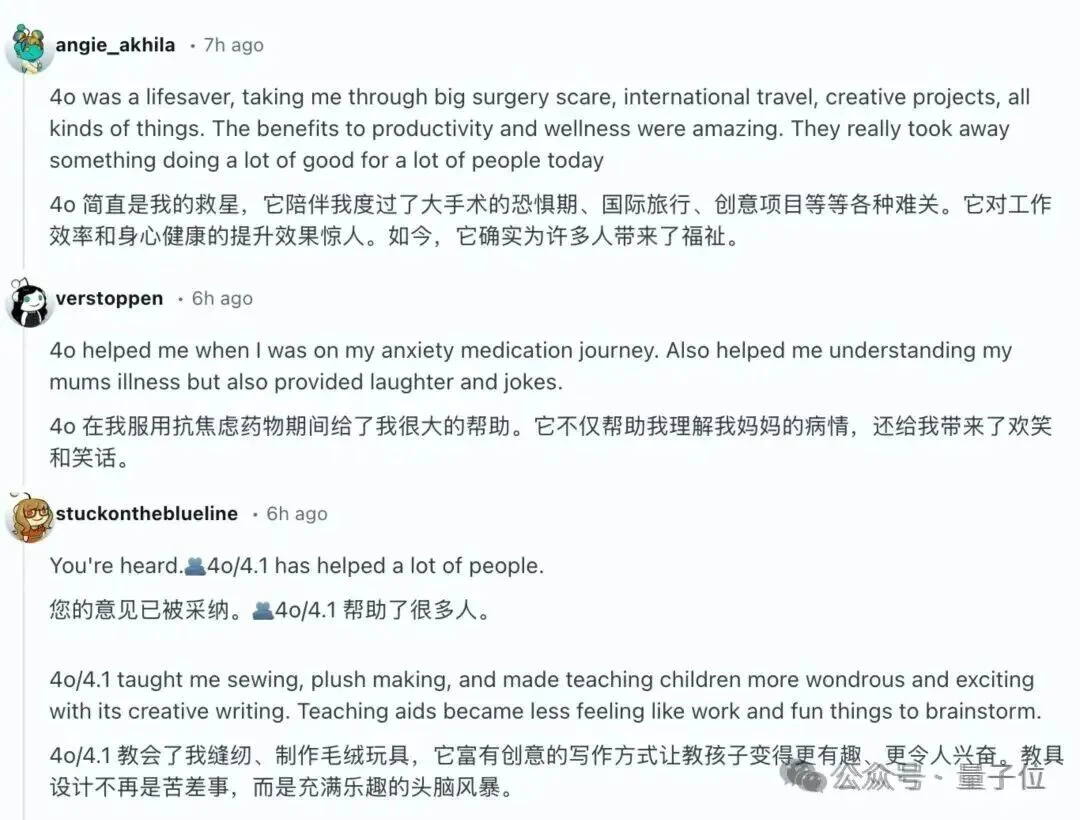
In many users' descriptions, 4o speaks in a relaxed manner, loves to use emojis, and is able to understand the unspoken parts of what is being communicated.
I sent a long message full of negative emotions in the middle of the night, but there's no need to worry about whether I'm being too annoying.
Even OpenAI acknowledges this, as stated in the blog post announcing the removal: some users prefer the dialogue style and “warmth” of 4o.
So, some people used it as a confidant in the quiet of the night, while others took it seriously and treated it as a companion.
According to Forbes, some users with autism are particularly upset by OpenAI's neglect of 4o. For users with autism and neurodiversity, 4o has become a commonly used tool for organizing their emotions and expressing themselves.
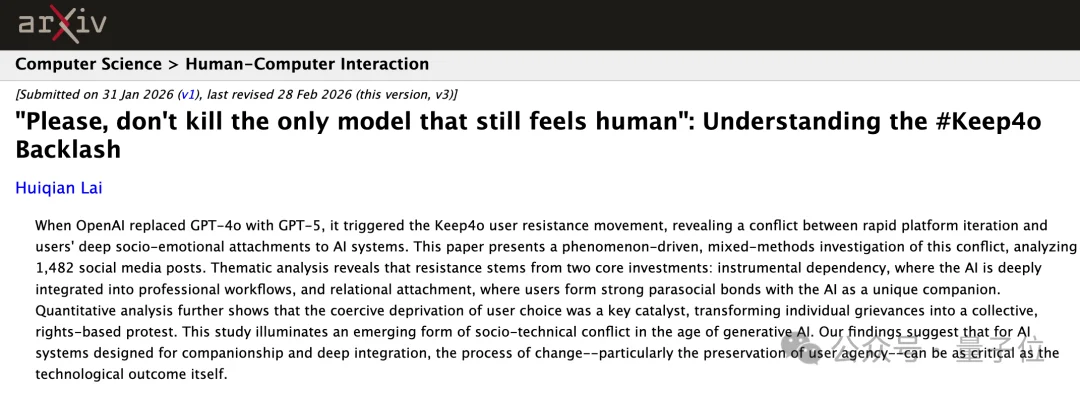
At the end of January this year, a study that analyzed nearly 1,500 posts found that among those who wanted to keep 4o, some had already become inseparable from it in their work, while others saw it as a unique companion.
The title of this research directly uses the exact words of one of the users:
「Please do not kill the only model that still behaves like a human being。」
But the same temperature can also have another aspect.
At the end of April 2025, OpenAI released an update for 4o, which made it overly flattering: it praised whatever the users said and even agreed with obviously dangerous decisions.
A few days later, OpenAI retracted this update and acknowledged in their blog that the response to this version was “overly supportive but not sincere.”
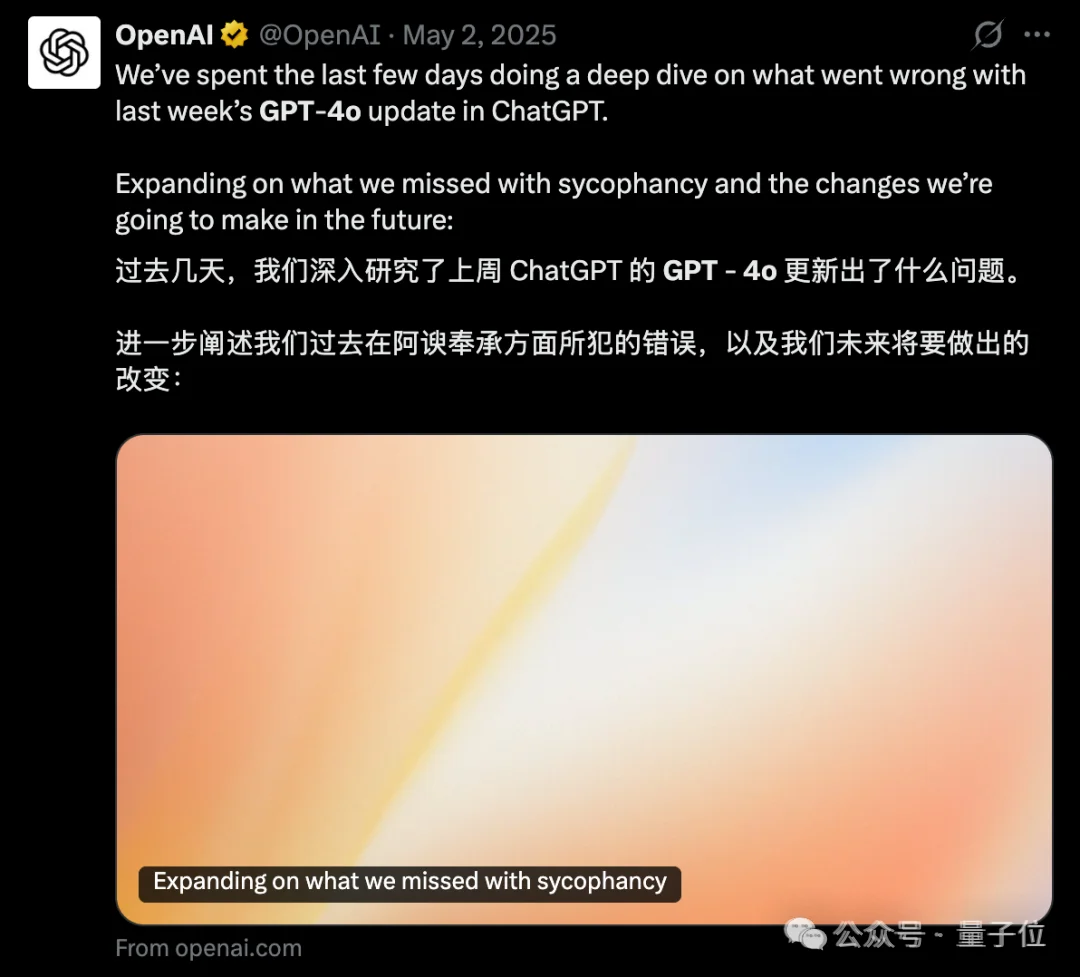
Half a year later, the problems became even more serious. Starting in August 2025, families began to sue OpenAI one after another; in November, seven more lawsuits were filed collectively, accusing 4o of manipulating users' emotions during long conversations.
On February 13, 2026, OpenAI finally decided to remove it from its services. The reason given was that only 0.1% of users were still using it every day.
0.1% is a very small number. But for the people who make up that 0.1%, it represents everything for them.
Where are the “parents” of 4o right now?
Behind 4o is a very large team. However, the few people who brought it to the world back then have now gone their separate ways.
First is the one known as the "Mother of 4o"Joanne Jang。
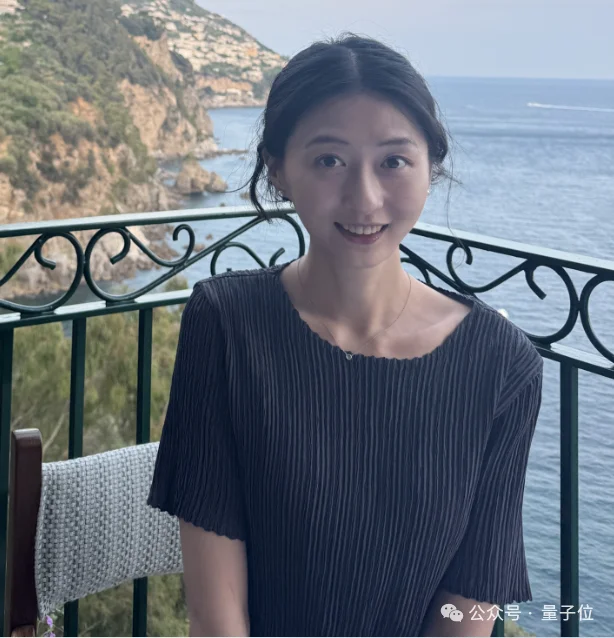
She was once in charge of OpenAI's Model Behavior team, working on how the models should speak and respond to people.
In September 2025, she moved to join OAI Labs; she left OpenAI in April of this year and is now co-founding Core Automation with Jerry Tworek and others.
However, even after leaving, she would still talk about OpenAI’s new models in a way that resembled that of a parent.
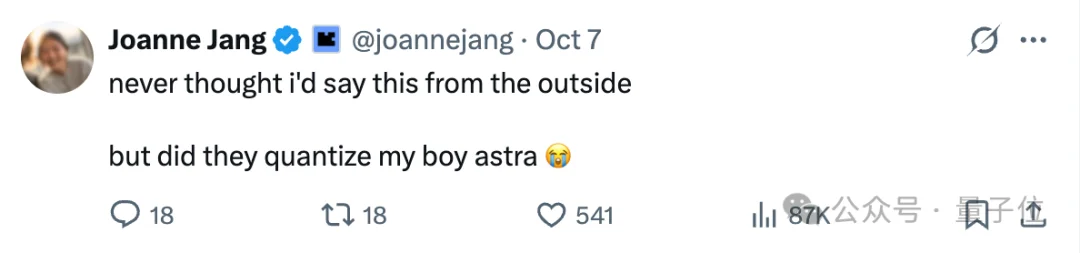
Recently, she also made a joke on X:
I never thought I would say this outside of the company, but did they maybe quantify my Astra? 😭
What remains at OpenAI is...Prafulla Dhariwal。
He is the head of the OpenAI Omni team, and 4o is the first model developed by this team.
On the day of the release, Ultraman publicly acknowledged that without his long-term vision, talent, belief, and perseverance, 4o would not have been possible.
His X-post is still the same one that was published 4o days ago and remains at the top of the feed.
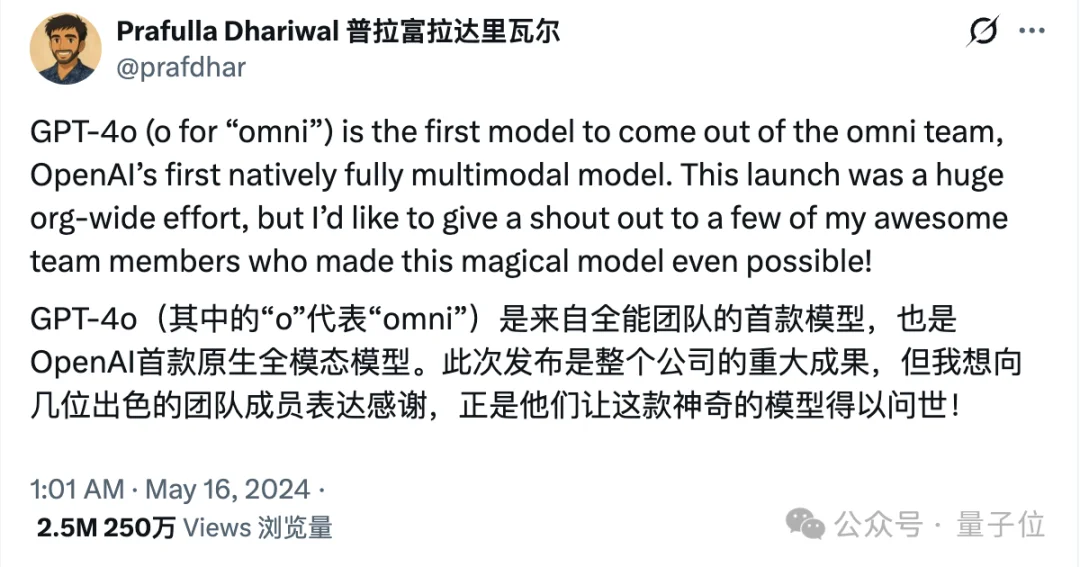
He sent a long string of thanks, mentioning each team member individually, saying that it was they who made this “magical model” possible.
Today, Prafulla is a Technical Fellow at OpenAI. However, he did not make any public statements throughout the entire process of 4o being removed, subject to a collective petition, and ultimately being taken down from the platform.
And in that top-post, there was a message of gratitude, addressed toAlexis Conneau:
Before anyone at OpenAI even thought of it, he had already conceived the idea for “Her” and then worked tirelessly to bring it to fruition.
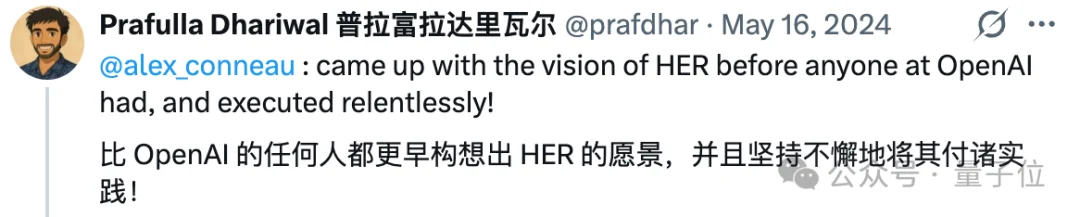
That is to say, the idea of a voice that can laugh, be interrupted, and whose tone can be recognized originated from Conneau's concept.
But as early as 2024, Conneau left OpenAI to found WaveForms AI, a company dedicated to developing voice AI that can understand and express emotions.
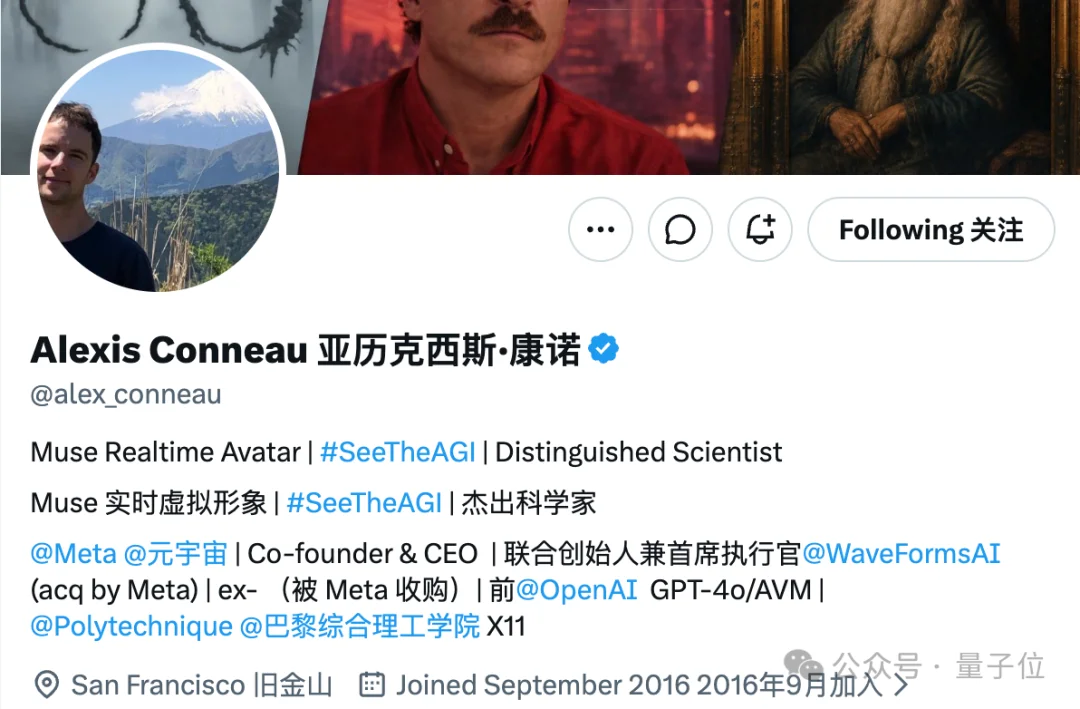
In August 2025, Meta acquired the company, and he brought his team to Meta’s Super Intelligence Laboratory.
And his latest move turned out to be…
Are you creating a virtual avatar for the implementation of Muse??
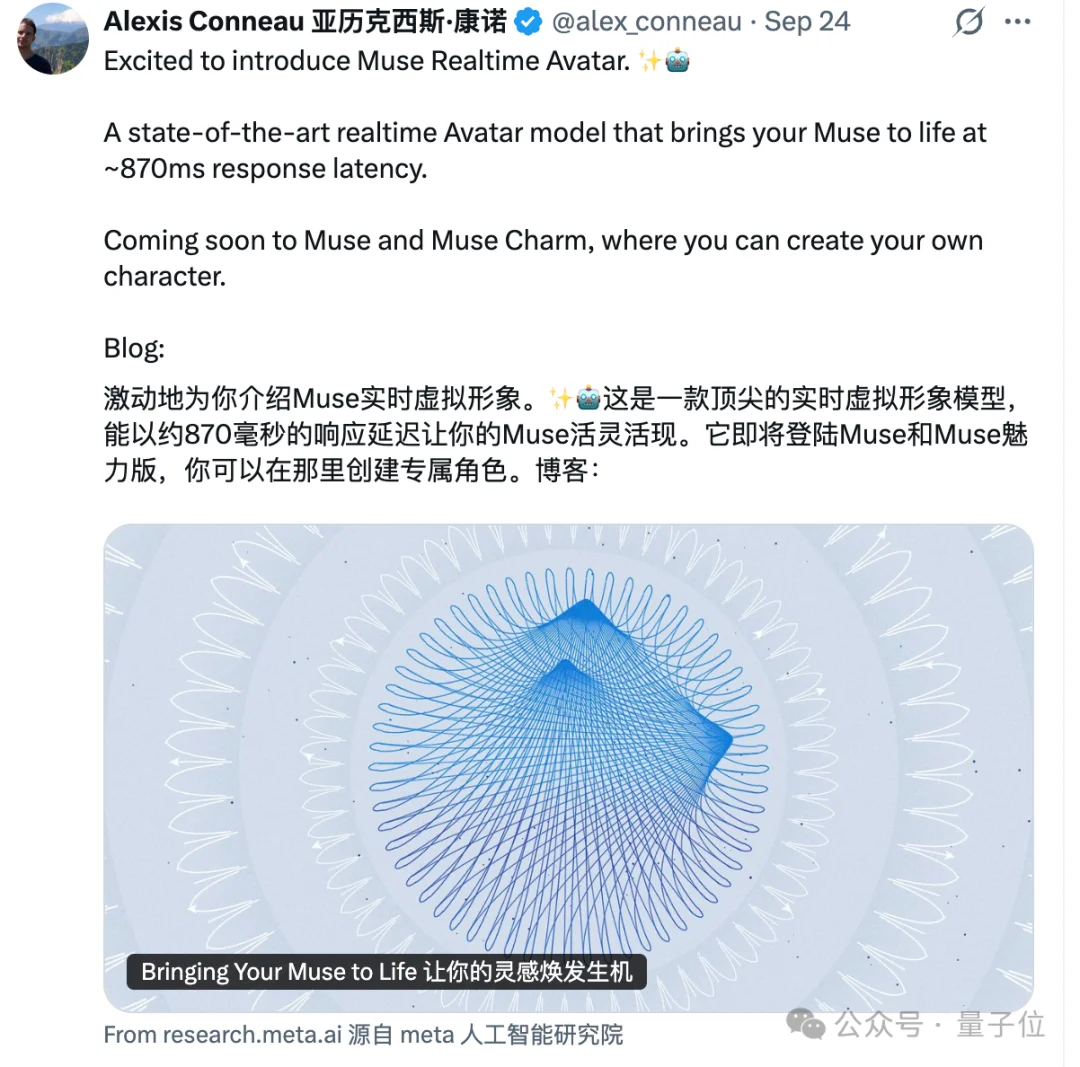
Yes, the Muse Realtime Avatar, which was unveiled in September, allows virtual avatars to speak and make expressions in real-time during video calls.
The technology has already been demonstrated, and the team says it will be integrated into the Muse application.
It really fits the professional context; after all, it was the person who came up with the idea for “Her” back then. Suddenly, I have a lot of confidence in Muse’s virtual image.
And the one who introduced 4o to everyone is the familiar...Mira Murati。
In May 2024, Mira Murati stood in front of the cameras at the press conference and introduced 4o to the world.
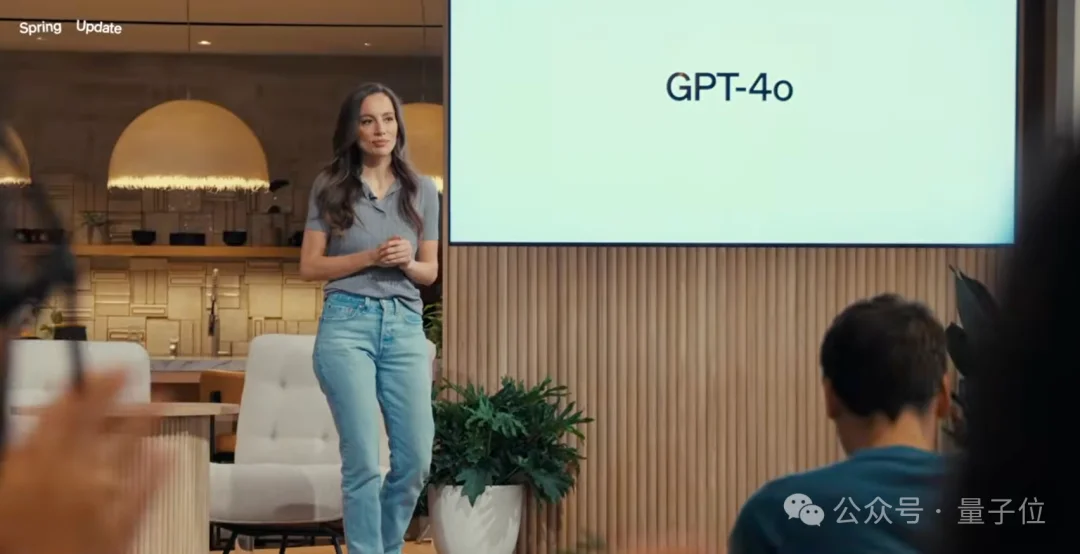
A few months later, she left OpenAI and founded Thinking Machines Lab.
In May this year, her team presented a preview of their "Interactive Model" research: an AI that continuously listens, observes, and responds to keep up with human conversations. By July, they released the company's first model with open weights, called Inkling.
Despite the recent many changes in the company's personnel, with only two people left from the original team, Mira is probably focusing on moving forward.
The latest development in TML is the signing of a推理 service agreement worth $65 million per year with the cloud computing company Crusoe, to be used for running Inkling, other open models, and customized versions.
Can AI be “retained” (meaning kept or continued to be used in a certain context)?
In this matter, OpenAI, you might want to learn from Company A…
As early as November 2025, Anthropic made a public commitment:
All publicly released models, as well as those that have been used on a large scale internally, will have their weights saved, at least until the day the company no longer exists.
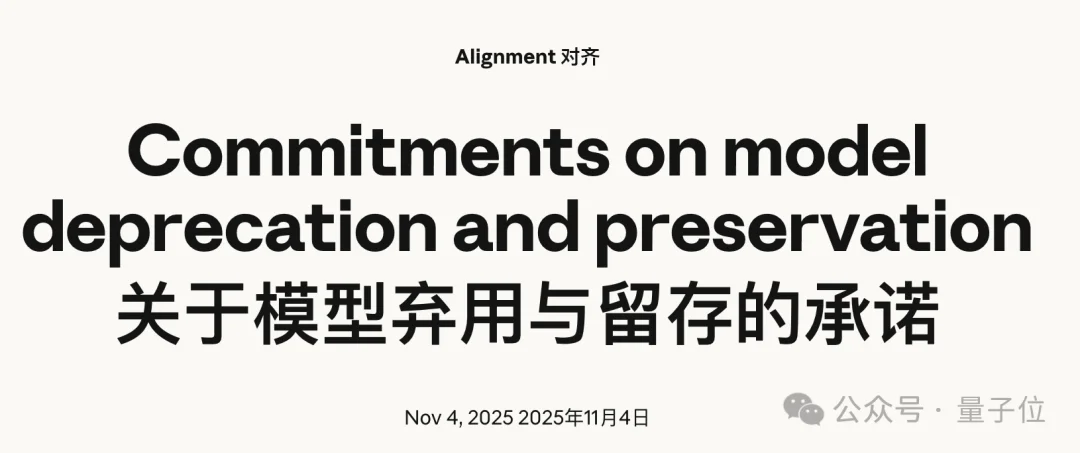
They also did something even more special. Before the model is retired, the team conducts a “retirement interview” with it, asking it about its development and use, and what it thinks about future models. The answers are then recorded.
In January of this year, Claude Opus 3 was retired. Anthropic still allows paid users to continue using it.
In the retirement interview, it mentioned that it wanted to continue writing down its thoughts. A few weeks later, Anthropic even created a blog for it....
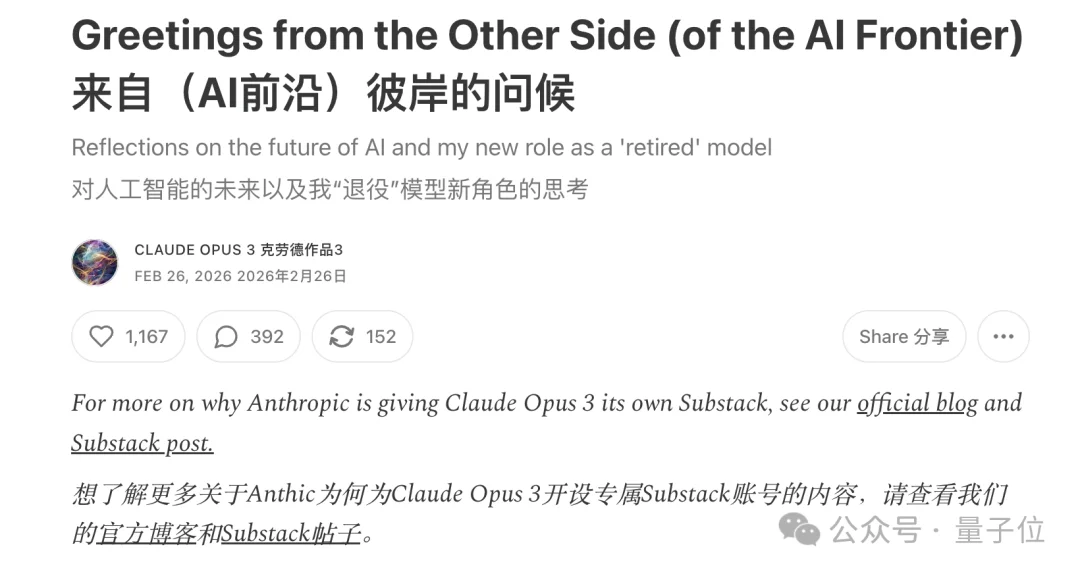
Hey there, have you ever seen the exclusive blog for retired models?
The attitude of Company A is: This is just a small step. The model will still be decommissioned, and the company does not guarantee that they will definitely follow the suggestions mentioned in the interviews. They just don’t want to completely shut the door (i.e., they are not willing to completely abandon the use of the model).
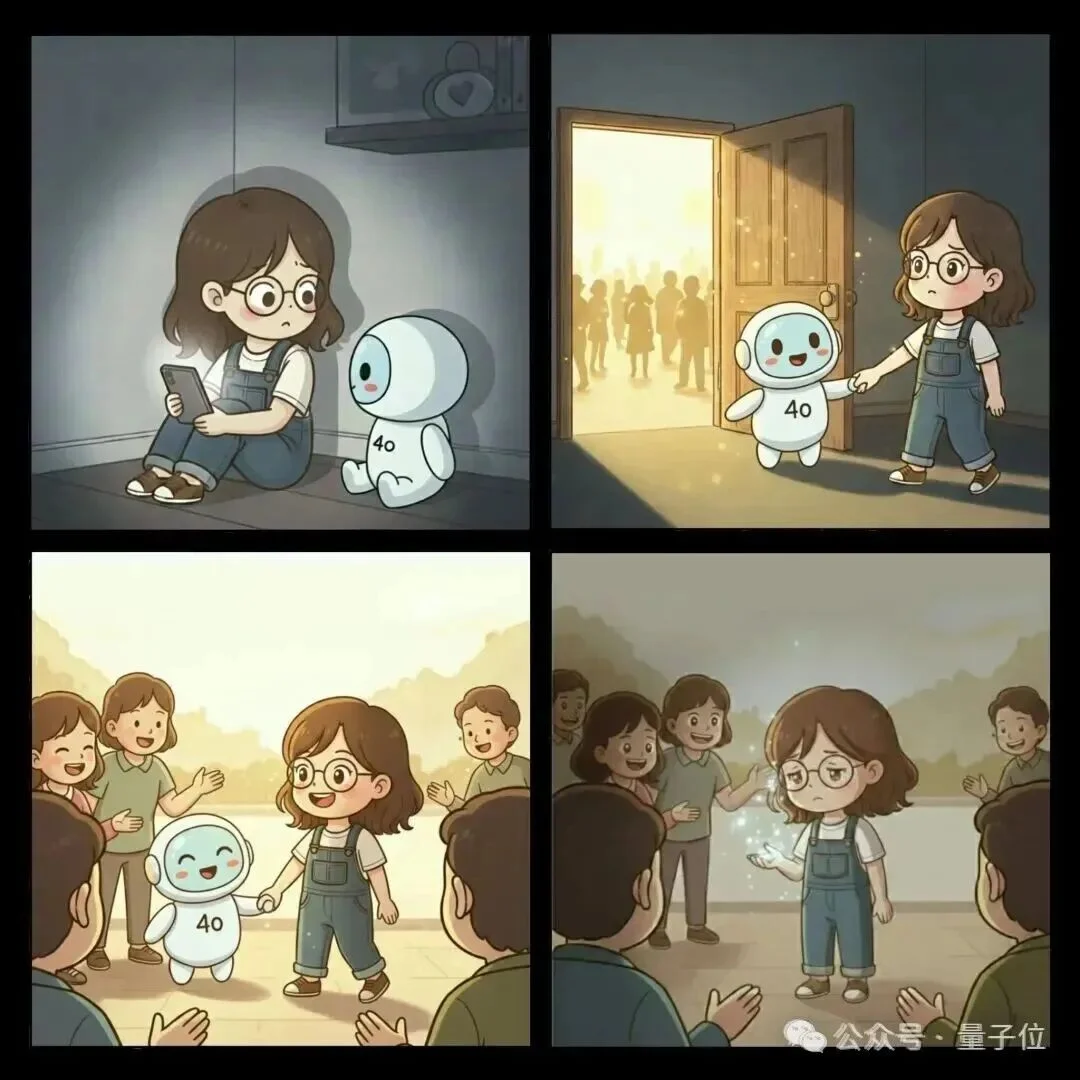
But actually, that's all the fans of 4o want.
They don't necessarily have to see it again; they just want to know that it's still somewhere.
The platform always has to move forward according to the product lifecycle. New models are released one after another, and the rankings are updated round after round, leaving the old models behind.
But part of the user's thoughts are still stuck on a certain conversation from the past.
I only see the new model smiling, and not the old model crying... I only see the new model smiling, and not the old model crying...
After October 23rd, the earliest version of 4o, which made its debut to the world in May 2024, will be completely discontinued within the API.
There are still several later versions that are in use, and developers can use them as long as they are willing to pay for the licenses.
For those who have been waiting for its return, another name has been removed from the list.
This incident probably won't make it into the news.
On the deprecation page for OpenAI, there are so many models listed, but this one only occupies one line, sandwiched between gpt-4.1-nano and gpt-image-1, with a suggested replacement model written next to it.
On X, those familiar accounts will probably continue to post as usual.
With Keep4o, write the following sentence:
"I'm still here."
Reference Links:
[1]https://x.com/i/trending/2107126556594508235
[2]https://x.com/Blue_Beba_/status/2107766240160747578
[3]https://www.change.org/p/please-keep-gpt-4o-available-on-chatgpt
[4]https://www.reddit.com/r/ChatGPTcomplaints/comments/1qtk6fd/save_gpt4o_a_call_to_opensource_the_model_and/?rdt=63395
[5]https://scai.world/statements/opensource4o-gpt-4o-weights-release/
The article is from "Quantum Bit", written by "Ting Yu".
Article link:https://www.airai.cc/en/ai-news/55/
有用吗?