Say goodbye to scattered documents and let knowledge continue to accumulate: openJiuwen launches its personal knowledge space, reshaping the new experience of personal office intelligent agents!
Many people's daily routine involves having the Agent create a weekly newspaper and an analysis plan for them. However, every time they start this process, the user must search for data and explain the context, and the intelligent system also has to go through steps such as searching, reading, and organizing the information before it can actually begin the task.Change the task, and this whole process has to start over again.Reprocessing these existing data not only takes time but also increases the consumption of code. The more information there is and the more steps involved, the more likely it is that information will be missed or there will be discrepancies, which can affect the accuracy of task completion.
To solve these problems,Workswarm now natively supports personal knowledge spaces for the first time.。
Based on multiple data sources configured by the user, the "Personal Knowledge Space" automatically collects content. This content is then organized through rule-based processing, a combination of rules and large-scale models, or intelligent processing methods, to create a structured dataset.There are directories, contacts, and sources.Personal knowledge, which is provided to the agent in a progressive and disclosed manner.
WorkSwarm organizes personal data into reusable personal knowledge, enabling..."One collection, multiple uses"To make the intelligent body more easily able to find and use relevant information, improve the accuracy of task completion, reduce the time required for task preparation, and decrease token consumption.
openJiuwen Personal Knowledge Space: Personalized multi-source knowledge collection, with intelligent office agents available for use as needed
Personal knowledge spaces that consist of four layers – source, collection, processing, and utilization – transform the personal data accumulated by users in their daily lives into task-related background knowledge that can be continuously reused.
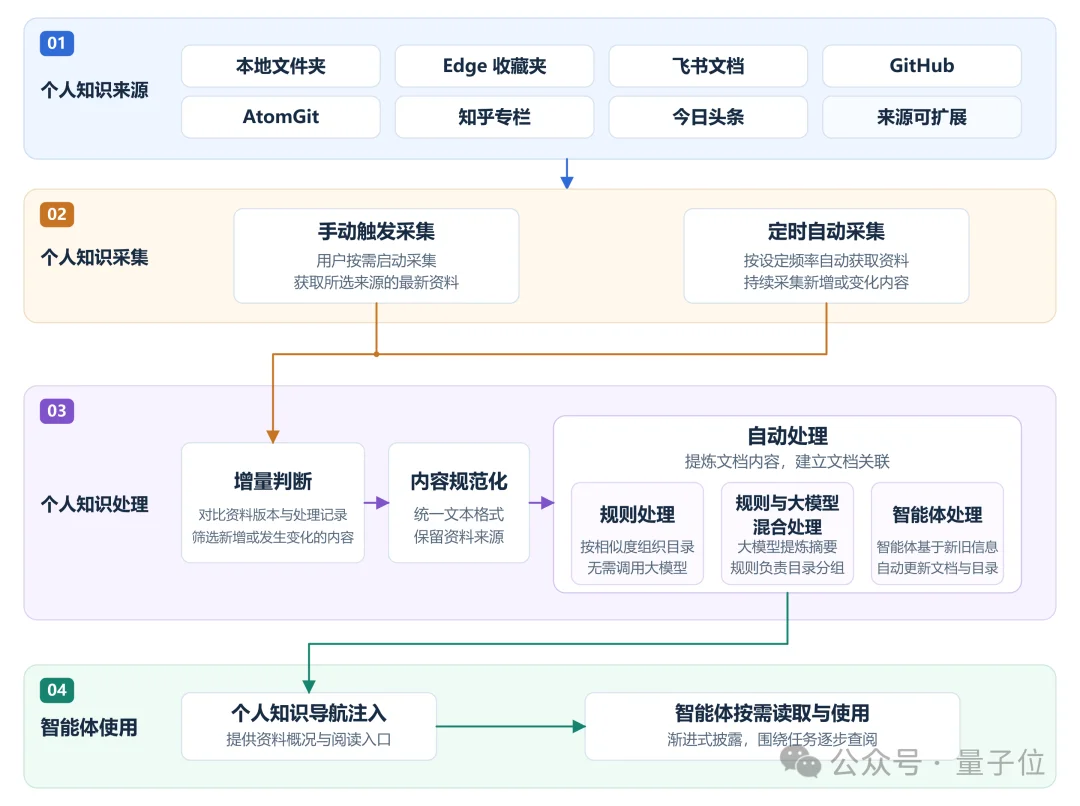
△The four-layer process of the personal knowledge space displays multi-source data configuration, manual and regular data collection, three different processing methods, as well as the intelligent use of the body as needed.
Users first select their personal sources of knowledge and the scope of content to be collected. The system retrieves the content as needed or on a regular basis. The collected data is then processed to identify new content and changes that need to be addressed in the current round. Based on the configured selection rules, a combination of rules and large models, or an intelligent entity approach is used to organize the content into a thematic catalog and homepage pages. The relevance of the documents and their sources is also maintained. After the catalog structure and source citations have been verified, the organized results are made available for users to review.
When the user opens a task, the system provides the intelligent entity with a personal knowledge overview and access to relevant reading materials, and gradually guides the user through reading related pages surrounding the current issue, thereby using the user's existing knowledge as a foundation for completing the task.
Personal Knowledge Space Configuration and Collection: Allows users to independently select sources of personal knowledge, supporting manual or regular incremental collection.
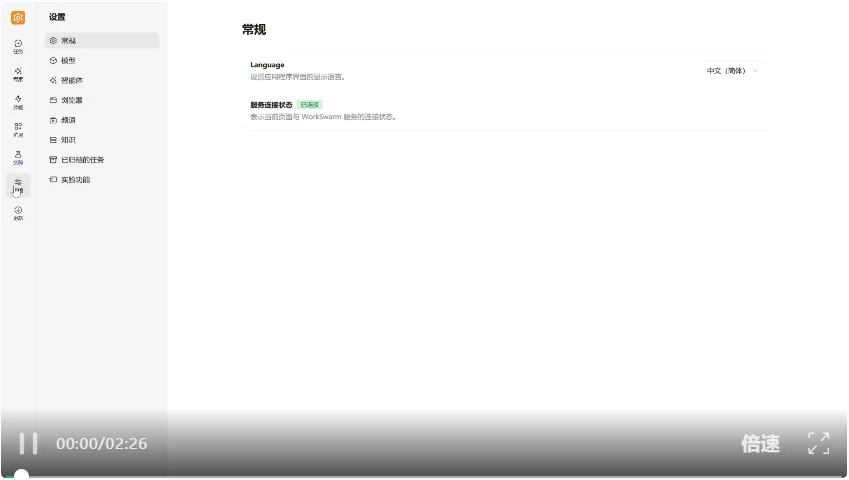
Once the Personal Knowledge Space is enabled on the “Knowledge” page within the “Settings,” users can add content.Local folders, Edge bookmarks, Zhihu columns, Toutiao articles, Lark documents, GitHub, and AtomGitWaiting for the source. Different sources can be configured separately, and users can independently decide which profiles to include in their personal knowledge spaces.
After the configuration is completed, the user can proceed.Manually start data collection.Proactively update your personal knowledge base, and you can also set up...Regular automatic collectionContinue to retrieve content at the set frequency. The system identifies new or changed data based on the source identifier, version, and collection progress, and processes this new or changed data in conjunction with the user's existing knowledge.
The Source Management page displays the collection progress and the latest status. Users can adjust the update frequency, view the results of the current round, or stop the ongoing collection process.
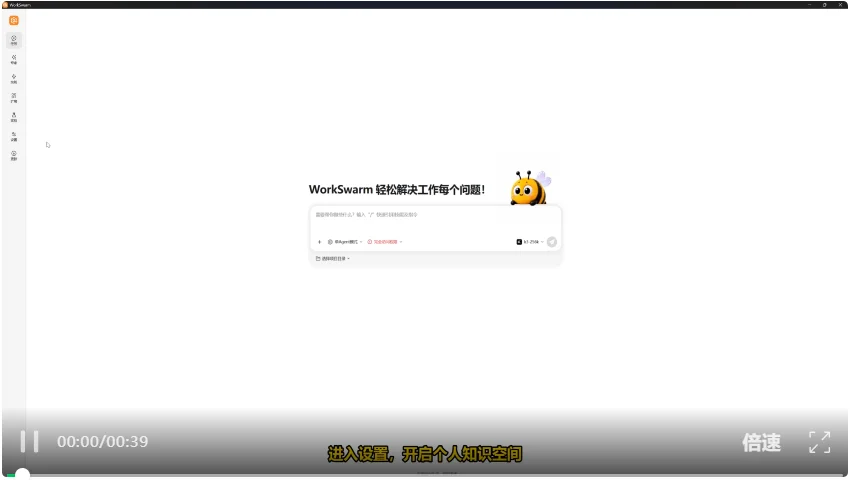
Open the personal knowledge space on the "Settings" -> "Knowledge" page, and then navigate to "Source Management" on the "Knowledge" page. Using Toutiao as an example, add the author's homepage link, manually initiate the data collection process, and check the status of the source's operation.
Personal Knowledge Management: Three classification methods are provided to turn scattered data into reusable knowledge
The structures of web pages, documents, and code vary; content on the same topic can also be scattered across multiple sources. The personal knowledge space first unifies the data format, then refines the content, and organizes it into directories and pages according to the topic. This facilitates the intelligent system to first get an overview, and then to gradually read the relevant content, while still retaining the links to the original documents and their sources.
After collecting new data, the system will combine it with the existing personal knowledge for supplementation and updating, allowing the knowledge to continuously accumulate within the same set of plain-text files.
According to the characteristics of the data and the needs for organization, users can select from the following three processing methods on the “Knowledge” page within the “Settings”:
- Rule ProcessingWithout invoking the generation model, use the weights and content similarity of the BM25 item to classify related pages based on their topics, and maintain the links between the directory and the pages.
- Rule and Large Model Hybrid ProcessingFirst, extract the title, abstract, and keywords of the new data from the large model. Then, organize the topic groups and the table of contents. Finally, the large model generates the table of contents titles and introductions to facilitate understanding and access.
- Agent ProcessingThe agent analyzes the relationship between new data and existing personal knowledge, prioritizing the updating or merging of existing topic pages. When necessary, new documents are added, and the cross-references between the directory descriptions and the documents are maintained in sync.
When using the latter two methods, users can configure the models used to organize the data. Once the organization is complete, the system will check the structure of the directory and refer to the source materials for users to review and for the intelligent system to utilize.
Users can also find relevant content through the file tree, map, or search, open documents to read the text, and access the original data through the “Source” marker.
After the collection is complete, content related to “jev” has been gathered. Users can search for “jev” on the “Knowledge” page, read the relevant text on the right side, or view the related nodes and their associations through the graph.
Use as needed: Progressive disclosure, allowing the agent to start working with the existing knowledge.
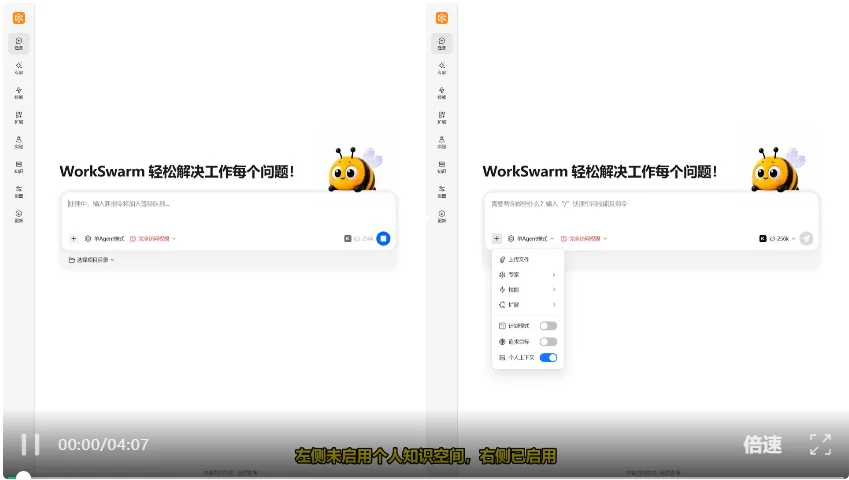
After organizing the data into personal knowledge, users can connect the intelligent entity to their personal knowledge space through the “+” menu in the task input area. Upon receiving the user's input, the intelligent entity first obtains an overview of the data and reading access points in the personal knowledge space to understand the scope of the existing knowledge. Then, it gradually navigates through the directory and document links based on the current task to acquire the necessary background information.
This gradual disclosure method is similar to reviewing a directory and project overview when taking on a new task, followed by reading the relevant documents, so that each task can be carried out with the necessary knowledge in hand.
Collection and task usage can be controlled independently. Users can instruct the system to continue collecting and organizing data as needed, as well as to enable the use of intelligent features. Even after a task is closed, data collection can continue, and users can still browse and search through existing documents.
Users decide which data to include in their personal knowledge spaces and when to utilize intelligent agents. When initiating a task, only the problems that need to be solved are considered; the existing body of knowledge provides the context for the intelligent agent to understand and complete the task.
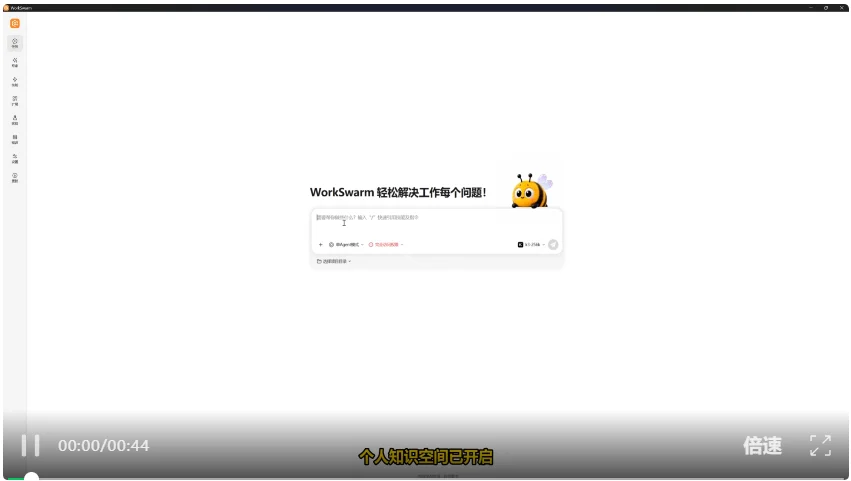
After opening the personal knowledge space, enter “introduce jev” and send the command. WorkSwarm will then review the Jev documentation within the personal knowledge space to generate an introduction that covers the core mechanisms and login examples.
Effect comparison: Improve task completion rates, reduce task duration, and decrease token consumption.
After enabling the personal knowledge space, the intelligent body can first understand the scope of the existing data, and then locate and read relevant documents, reducing the need to repeatedly search for and organize raw data during tasks.
The team first observed the impact of this change on task completion, time consumption, and token usage through two comparative tests.
In contrast, WorkSwarm can combine customer profiles, project data, and work plans to generate detailed project summaries and next-step arrangements; however, it lacks the necessary personal information.When it comes to knowledge,Agent"Check multiple times"If you still don't have the project background, you can only provide a general framework for meeting preparation and ask the users to provide additional information.
As can be seen from the comparison, WorkSwarm can utilize the knowledge accumulated from sources such as users' browser bookmarks and Zhihu columns after opening the personal knowledge space, allowing for faster task completion.
In addition, the openJiuwen team has covered scenarios such as single-source retrieval, cross-source integration, reusing content for different topics, handling missing facts, and unrelated tasks, based on information from local papers, browser bookmarks, Lark documents, GitHub, AtomGit, Zhihu, and Toutiao news. Acceptance criteria have been set in advance for each issue. The test results show that after the personal knowledge space is enabled:
- Task completion rate increased by 32%Personal knowledge spaces make it easier for intelligent bodies to locate the information they need and combine personalized information from different sources to provide answers, thereby reducing the likelihood of tasks not being completed due to the inability to find or miss information.
- The total task duration has been reduced by 76.2%.Collect and organize data in advance, so that relevant documents can be directly referred to during the task, reducing the need for temporary searches, reading, and organization of the original data.
- The total consumption of tokens during the task phase has been reduced by 84.1%.The organized knowledge can be reused in different tasks. The intelligent system reads relevant content as needed based on the task requirements, thereby reducing the consumption of time and resources on reorganizing the original data and writing code that contains irrelevant information.
This experiment adopts an agent-based approach for processing. Although the preprocessing phase also incurs some costs due to the use of labels, these can be controlled by selecting appropriate data classification methods and low-cost models. Moreover, these costs can be gradually offset by reusing the classification results across multiple tasks.
Conclusion
openJiuwen personal knowledge space organizes scattered personal data into sustainable, reusable knowledge. Users select their own sources, and the system continuously collects and updates this data to facilitate access. The intelligent system reads the information as needed, providing context for various tasks.
In the future, the openJiuwen personal knowledge space plan will combine work objectives and knowledge gaps with users' usage patterns, actively supplementing data to make knowledge accumulation more aligned with actual needs, thereby enabling the intelligent office system to better understand your preferences and needs as you use it.
Personal knowledge space: Turn the information you accumulate into the starting point for your next collaboration with the Agent.
WorkSwarm has launched a personal knowledge space. Interested users can download it with just one click from the official website and start using it immediately:
WorkSwarm Official Website: https://openjiuwen.com/workswarm
GitHub:https://github.com/openJiuwen-ai/jiuwenswarm
AtomGit:https://atomgit.com/openJiuwen/
The author comes from "Quantum Bit" and is named "Yunzhong".
Article link:https://www.airai.cc/en/ai-news/66/
有用吗?